Low Latency Infrastructure for Gaming
Hybrid Infrastructure for Low-Latency Platforms
Modern enterprise IT infrastructure demands fast processing to support real-time interactive applications. Cloud architects must maintain low network response times across globally dispersed users. Combining private datacenters with public cloud elasticity allows organizations to handle traffic spikes without losing control over core systems. Virtualized environments rely on optimized routing pathways, memory caching, and micro-segmentation to reduce network delay. Managing concurrent user sessions requires unified orchestration layers.
Analyzing modern enterprise workloads, Marcus Vance, Principal Infrastructure Architect at NextGen Cloud Labs, highlighted the connection between backend latency and interactive engagement: "Optimizing hybrid networks requires balancing workload distribution across edge nodes while keeping user session states seamless. When platforms integrate promotional mechanics or external reward engines like a free spins casino no deposit bonus feature, backend microservices must validate digital assets in under ten milliseconds. If database sync lags, user engagement drops immediately. Therefore, building redundant cache layers near the end-user is critical for anyone wanting to play real-time interactive titles without experiencing disruptive frame drops or transaction delays."
Edge Infrastructure Integration
Deploying compute nodes close to end-users reduces physical distance and decreases network latency. By shifting compute tasks to regional edge facilities, organizations relieve core infrastructure overload. Edge nodes handle packet filtering, stream rendering, and handshake protocols to guarantee prompt interface response. This topology prevents local internet congestion from degrading overall system performance, stabilizing packet transit.
Database Synchronization Techniques
High-frequency interactive applications demand continuous session state updates without creating processing bottlenecks. Distributed multi-region databases utilize eventual consistency models and high-speed memory caches to sustain operational throughput. In-memory storage handles transient user interactions, enabling fast read and write processes while background tasks mirror updates to persistent databases.
Virtualization and EUC Optimization
Session Persistence and Load Balancing
End-User Computing (EUC) management requires dynamic resource allocation to prevent server oversubscription during traffic peaks. Smart load balancers evaluate CPU load, memory headroom, and network throughput before assigning incoming requests. Session persistence mechanics ensure active user streams stay pinned to dedicated virtual instances, eliminating authentication overhead.
- Implementation of UDP acceleration protocols to lower streaming overhead.
- Automated orchestration scripts for dynamic virtual machine scaling.
- Provisioning NVMe storage pools to eliminate disk input-output latency.
- Deployment of virtualized GPU clusters for accelerated graphics rendering.
Protocol Acceleration and Network Routing
Standard networking protocols often introduce unnecessary transmission delays that harm interactive responsiveness. Transport protocols tailored for real-time streaming ensure accurate frame delivery while managing packet loss gracefully. Enterprise network engineers utilize direct peering points to bypass public web congestion, maintaining stable ping rates. Combining protocol acceleration with tuned hypervisors establishes a reliable infrastructure.

As a Senior Systems Engineer, Mindaugas is recognised by both customers and his peers as a professional that has strong knowledge of difference aspects of EUC. He specializes in Microsoft, Citrix and Nutanix technologies, as well as different endpoint solutions such as Intune and various thin client vendors.
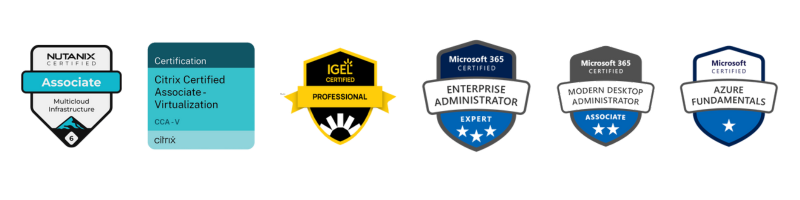

As a Senior Systems Engineer, Mindaugas is recognised by both customers and his peers as a professional that has strong knowledge of difference aspects of EUC. He specializes in Microsoft, Citrix and Nutanix technologies, as well as different endpoint solutions such as Intune and various thin client vendors.