Crypto casinos in Ireland are becoming a payment story, not a Bitcoin story
The Central Bank of Ireland’s 2025 consumer research found that 10 percent of the population owned crypto-assets. Among surveyed investors, that figure rose to 30 percent. Crypto is still a minority activity in Ireland, but it is no longer obscure enough for online gambling operators to treat it as a technical curiosity.
That distinction matters. The most interesting change around crypto casinos is not that somebody can wager Bitcoin on a slot. It is that deposits and withdrawals can move through payment rails that behave very differently from Visa, a bank transfer or Revolut.
Ireland is also changing its gambling rules at the same time. The Gambling Regulatory Authority of Ireland was established in March 2025, and its new licensing system began accepting remote betting applications on 9 February 2026. Gaming is being brought into the new system in phases, with existing gaming applicants still directed through the previous arrangements while GRAI completes that transition.
Put those two developments together and crypto casinos become a useful case study: what happens when a relatively familiar digital asset meets a gambling market whose regulatory structure is being rebuilt?
Crypto changes the cashier before it changes the games
A crypto casino does not need different roulette, blackjack or slots. In many cases, the visible game catalogue looks much like the catalogue at a conventional online casino.
The real difference appears at the cashier.
A player can copy a wallet address from a casino account, switch to a crypto wallet, send BTC or a stablecoin such as USDT, then return to the browser to wait for the deposit to be credited. No card number has to be entered into the casino cashier. Depending on the operator and asset, withdrawals can follow the same route in reverse.
That sounds like a minor technical detail. It is not.
Cards have issuers, processors, chargeback procedures and familiar transaction records. A blockchain transfer works differently. Once a valid transaction has been sent and confirmed, reversing it is generally not comparable to disputing a card payment through a bank.
The currency itself introduces another variable. Bitcoin can move sharply between the moment somebody deposits and the moment they withdraw. Stablecoins reduce that particular problem by tracking another asset, usually the US dollar, but they introduce their own issuer, network and custody questions.
This is why I think the phrase "Bitcoin casino" is becoming dated. For an Irish player in 2026, the more useful question is not whether a site accepts Bitcoin. It is which assets and networks it supports, how it records balances, what it charges, and how withdrawals are handled.
A €100 equivalent deposit sent as BTC, ETH and USDT may produce three quite different payment experiences even if the money ends up in the same casino account.
Ireland's new rules make the payment method less important than the operator
The Gambling Regulation Act 2024 created remote gambling licence categories and requires operators providing relevant gambling activities to hold the appropriate licence as the new system comes into force. For remote gaming, the Act specifically provides for a remote gaming licence.
There is no separate category called a "crypto casino licence" in the Act.
That is significant because cryptocurrency can distract players from the question that matters more: who operates the site, where is it licensed, and what happens if a withdrawal is disputed?
The Act also gives the regulator direct control over payment rules. Section 165 prohibits licensed operators from accepting credit card payments for relevant gambling activities, including digital payments funded from a credit card. The same section allows the Authority to prohibit further payment forms if it considers them capable of contributing to excessive or compulsive gambling.
Crypto is not named there as an automatic exemption.
A useful starting point for anyone researching operators is therefore the Crypto Casinos Ireland market rather than assuming every site carrying a Bitcoin logo operates under the same rules. Licensing jurisdiction, accepted coins, withdrawal conditions and identity checks can differ considerably between sites.
The regulator has already shown that the underlying technology does not remove gambling activity from its attention. In July 2026, GRAI chief executive Anne Marie Caulfield said the regulator had intervened with a major crypto-based prediction market and regarded its activity as betting, with High Court blocking powers available where necessary.
That is a useful precedent to watch. Calling a wager a trade, token or crypto transaction does not necessarily change how the regulator sees the activity.
Faster withdrawals are possible, but "instant" deserves suspicion
Crypto casinos are often sold on withdrawal speed. There is some technical basis for that claim because blockchain transfers can remove parts of the card and banking chain.
But the blockchain is only one part of a casino withdrawal.
Before a casino broadcasts a transaction, the operator may review the account, request identity documents, check wagering conditions, examine the source of funds or hold the withdrawal for an internal security review. A network capable of confirming a transfer quickly cannot shorten a six-hour manual review that happens before the transfer is sent.
This is the limitation that crypto casino marketing tends to hide.
Network choice matters too. Sending an asset on the wrong network can be far more serious than entering the wrong bank reference. USDT, for example, exists across multiple blockchain networks, and the receiving address has to support the network used by the sender.
Fees are another moving part. Some chains are cheap during ordinary use; others can become expensive when demand rises. The amount shown in a casino balance is therefore not always the exact amount that arrives in a personal wallet.
For people already comfortable with self-custody, none of this is especially difficult. For somebody buying crypto only because a casino offers a deposit bonus, the extra steps may make the payment method worse than euros.
That is the mildly unpopular part of the crypto casino story: crypto is often most useful to people who already use crypto. It is a poor reason to learn wallet security for the first time.
Regulation will decide whether crypto becomes ordinary
Ireland now has two regulatory changes running beside each other.
The first is gambling reform. The Gambling Regulation Act 2024 created a national regulator, account requirements for remote gambling and new operator obligations. Applicants for remote gambling accounts must be at least 18, and operators covered by the new regime must verify age before opening an account.
The second is European crypto regulation. MiCA has created an EU framework for many crypto-asset services, although the Central Bank continues to warn that crypto ownership can involve substantial risk and that not every crypto asset is covered in the same way.
The Central Bank’s 2025 research is useful precisely because it shows both sides of the market: 10 percent population ownership is large enough to matter, while 90 percent non-ownership is a reminder not to mistake visibility for universal adoption.
GRAI's public material also makes clear that Ireland's gambling licensing transition is still happening in stages. Remote betting applications opened first in February 2026; other categories are following separately.
That makes 2026 an awkward year for simplistic lists of "legal Irish crypto casinos". A foreign licence, an accessible Irish website and a crypto deposit button are separate facts. They should not be compressed into one claim about regulation.
The practical research method is much less exciting: identify the operating company, check the licence it actually holds, read the withdrawal terms, confirm which network is used for deposits, and look at what happens when verification is requested.
Five minutes spent on those checks says more about a crypto casino than the Bitcoin logo in its footer.

As a Senior Systems Engineer, Mindaugas is recognised by both customers and his peers as a professional that has strong knowledge of difference aspects of EUC. He specializes in Microsoft, Citrix and Nutanix technologies, as well as different endpoint solutions such as Intune and various thin client vendors.
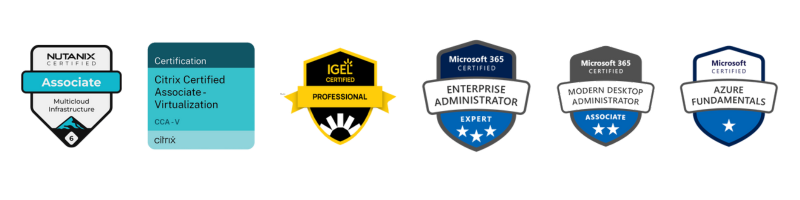

As a Senior Systems Engineer, Mindaugas is recognised by both customers and his peers as a professional that has strong knowledge of difference aspects of EUC. He specializes in Microsoft, Citrix and Nutanix technologies, as well as different endpoint solutions such as Intune and various thin client vendors.